18.06, Webinar From SQL scripts to production data platform on AWS
Services

AI-driven development lifecycle

Stop fighting your AI coding tools. We fix the gap between a generic coding assistant and your specific codebase — in five weeks.


PartnerAI Services Competency

We are honored to be recognized as the first AWS AI Services Partner in Poland/CEE, acknowledging our expertise with building production-grade AI-driven workflows and solutions.

Different code, same problem

  1. Initial excitement

    Developers install the tool, run it on greenfield code or simple tasks, and the results look impressive. Early demos go well. Expectations build.

  2. Context wall

    On the real codebase, the AI violates the architecture and conventions, picks the wrong patterns, invents APIs. Quality drops once work gets non-trivial.

  3. Quiet abandonment

    Developers stop trusting the tool, revert to manual work, and conclude that "AI doesn't work for our codebase." License renewal becomes hard.

Solution

Spec-driven development

Every task starts with a lightweight specification serving both developers and AI. Humans get a clear description of what to build and why; the AI gets a machine-readable instruction set with enough context to write clean, architecture-consistent code on the first pass.

Full spec Complex

New features and complex work. Captures affected components, business logic, data model changes, UI requirements, acceptance criteria, and test expectations.

Micro-spec Granular

Repetitive, pattern-based tasks (add a field, create a CRUD, modify a grid). Two to five lines of structured input. The AI generates the complete change set.

Book a discovery call
Services

What your team gets

Assessment & tool selection

  • OutputEvidence-based tooling report
  • AnalysisCost & performance projection

We assess your codebase, workflows, and previous AI attempts, benchmarking Claude Code and Kiro against real tasks from your backlog.

Spec-driven framework

  • OutputSpec reference library
  • ArtifactPattern templates in repo

We design spec templates aligned to your engineering patterns — full specs for new features and micro-specs for repetitive work.

Project rules & MCP skills

  • OutputVersioned project rules
  • SkillCustom MCP definitions

We define repo-level rules, MCP skill definitions, and context guides tuned for token efficiency and architecture consistency.

Enablement & measurement

  • Output90-day rollout plan
  • ReportPattern effectiveness report

We support rollout through hands-on workshops and async support, providing the metrics to track adoption and ROI.

≥50% effort reduction
on repetitive tasks
25–40% effort reduction
on business-logic and features
40% faster onboarding
and first contribution time
≥70% weekly active AI tool use
within 8 weeks of rollout

Tools

Pick your environment

Claude - logo
Anthropic

Claude Code

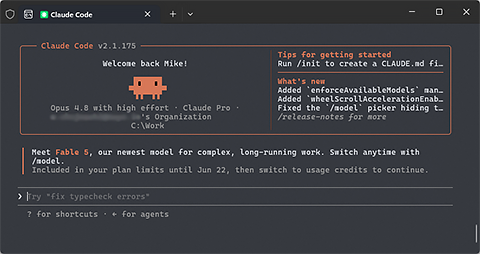
Terminal-native AI coding agent from Anthropic. Strong on agentic workflows: it plans, edits, runs tests and autonomously verifies its work.

Claude Code
  • Native MCP server support, skills, plugins and subagents
  • Latest Claude models available first, including Sonnet, Opus and Mythos
  • Spec-friendly out of the box (CLAUDE.md, AGENTS.md, slash commands)
  • Strong agentic patterns for multi-file edits, terminal access and test execution
AnthropicTeam and Enterprise seats
or
Amazon BedrockPay-per-use
or
Kiro - logo
AWS

Kiro

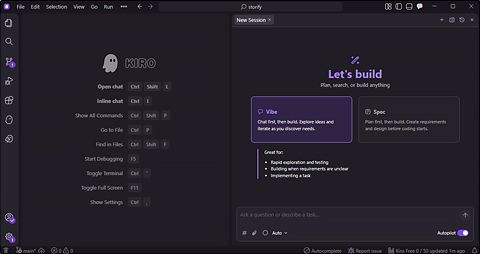
AWS-native AI coding environment with a familiar IDE feel. Built around spec-driven workflows from day one.

Kiro
  • Spec-driven development is a first-class concept in the tool
  • Traditional IDE experience — easy switch for teams coming from VS Code or JetBrains
  • Tight integration with the AWS developer ecosystem
  • Good fit for AWS-first teams who want their AI tooling close to the rest of their AWS workflow
  • AWS funding programs (where eligible) can offset initial adoption.
The choice depends on your IDE preferences, data residency and token economics.
We benchmark both against your real tasks — if a hybrid setup makes more sense for your team, we'll say so.
AI development patterns

Cover the entire lifecycle

Code generation is just part of the work. We provide AI-assisted patterns for every development stage, from requirements to documentation.

  1. Stage 1

    Requirements

    Ticket-to-spec

    Developer pastes a task description. AI retrieves relevant architecture docs, identifies affected modules, lists files likely to change, and drafts a structured spec.

  2. Stage 2

    Code exploration

    Subdomain deep dive

    AI provides a structured orientation to an unfamiliar functional area: modules involved, key files, common patterns, known edge cases.

    Trace the flow

    Developer describes a user action. AI traces the request path through the application layers, citing specific files and classes.

  3. Stage 3

    Implementation

    Spec-to-scaffold

    AI reads a micro-spec and generates the full change set following project conventions, across all files that need modification.

    Spec-to-plan-to-code

    AI reads a full spec, proposes an implementation plan, developer approves, then AI executes step-by-step with checkpoints.

  4. Stage 4

    Testing

    Spec-to-tests

    AI reads acceptance criteria and generates tests following your testing conventions, naming patterns, and coverage requirements.

    Edge case suggestion

    AI reviews the spec and implementation and suggests test cases the developer might have missed.

  5. Stage 5

    Code review

    Pre-review check

    AI compares the diff against the original spec and project conventions, flagging mismatches before human review.

  6. Stage 6

    Documentation

    Doc-from-spec

    After a feature ships, AI generates documentation from the spec and implementation, closing documentation gaps organically.

Week 1

Assessment & tool selection

Codebase review, workflow mapping, developer interviews. Real-task benchmarks of Claude Code and Kiro with cost projections.

You keep

Assessment report and a confirmed tool choice.

Weeks 2–4

Framework & artefacts

Spec templates, 7+ SDLC patterns, project rules per repository, MCP skill definitions, prompt templates and a context separation guide. Validated jointly on real backlog items.

You keep

Spec framework in version control.

Weeks 4–5

Developer enablement

Three two-hour hands-on workshops: foundations, core patterns, advanced workflows. Developers practise on their own code, with Chaos Gears guiding. Async support throughout the trial.

You keep

An autonomous, AI-powered team.

Week 5 onwards

Measurement & iteration

Pattern Effectiveness Report, token usage analysis, 30/60/90-day adoption plan, cost optimisation guide and self-service metrics for your team to track after we leave.

You keep

Metrics + a rollout plan owned by your team.

Optional add-on

Knowledge base & MCP integration

Integrate your documentation into your team's IDEs via MCP skills, powered by an Amazon Bedrock-based retrieval system. Combined effort: ~40-45 person days.

Ready to make AI coding work?

Tell us what you tried, what broke, and where the codebase is hardest. We'll come back within two business days with a recommended starting point.